Hipobuy Spreadsheet categories, from light parcels to heavy ones
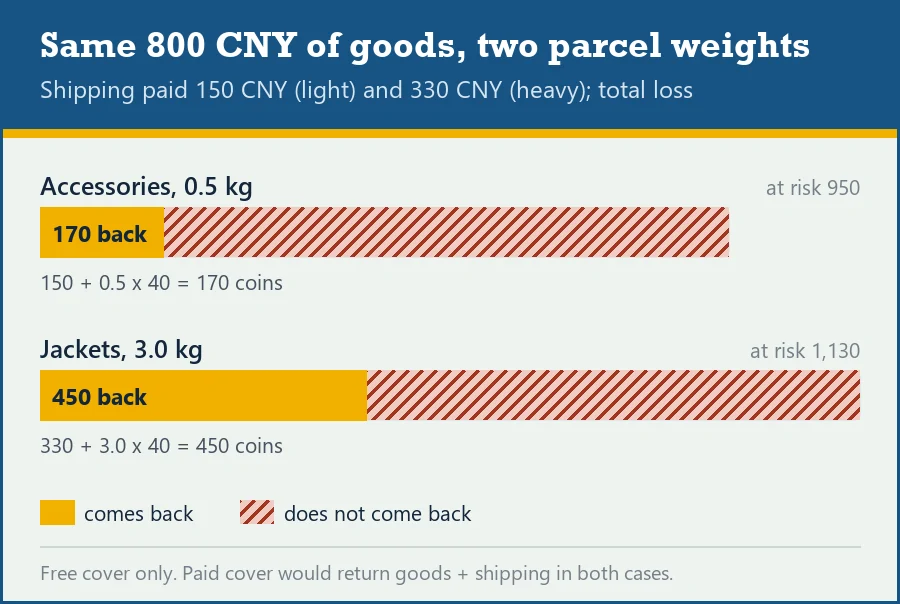
The categories are the same ones you would expect. The order is not: it runs from the lightest kind of parcel to the heaviest, because weight is the only thing the free cover pays by.
Why the order follows weight instead of popularity
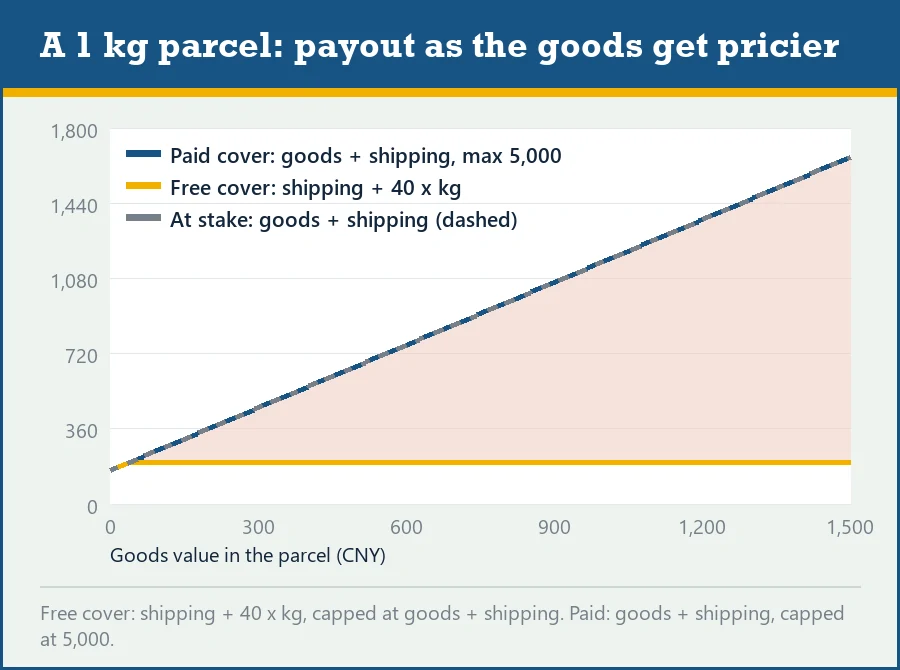
Free cover returns the shipping you paid plus 40 yuan for each charged kilo. A small parcel of jewellery weighing a few hundred grams earns only a handful of those kilos, however much the pieces cost. A box of jackets earns several, and if the route bills on volume, a bulky jacket can count for more than it weighs.
So the categories at the start of the list are the ones where the free cover leaves the widest gap between what you lose and what comes back. Further down, the gap narrows. That is a statement about the rule, not about any particular item: an expensive pair of boots can still outrun the 40-yuan rate easily.
Each card below leads to a category or a search on the product catalogue. The small word on the card says which: "Category" for a category page, "Search" for a search. Prices and listings there change constantly; nothing here vouches for a seller or a product.
Sixteen categories with pictures
From jewellery, where a parcel can weigh less than the box it ships in, to sneakers, which arrive in their own heavy cartons. The weight bar under the grid runs the same way.
 JewelleryLightest parcels of allCategory
 HatsSoft, light, packs smallCategory
 T-shirtsLight and folds flatCategory
 WomenswearLight to middlingSearch
 SweatpantsMiddling weightCategory
 JeansHeavier cloth than it looksCategory
 HoodiesBulky; may bill on volumeCategory
 OuterwearBulky when paddedCategory
 BagsHardware and shape add weightCategory
 SneakersHeaviest: shoes plus boxCategory
 Sports jerseysConfirm team, season, size and any personalisation.Category
 BeltsCheck usable length and buckle dimensions.Category
 EyewearConfirm frame width, lenses and included case.Category
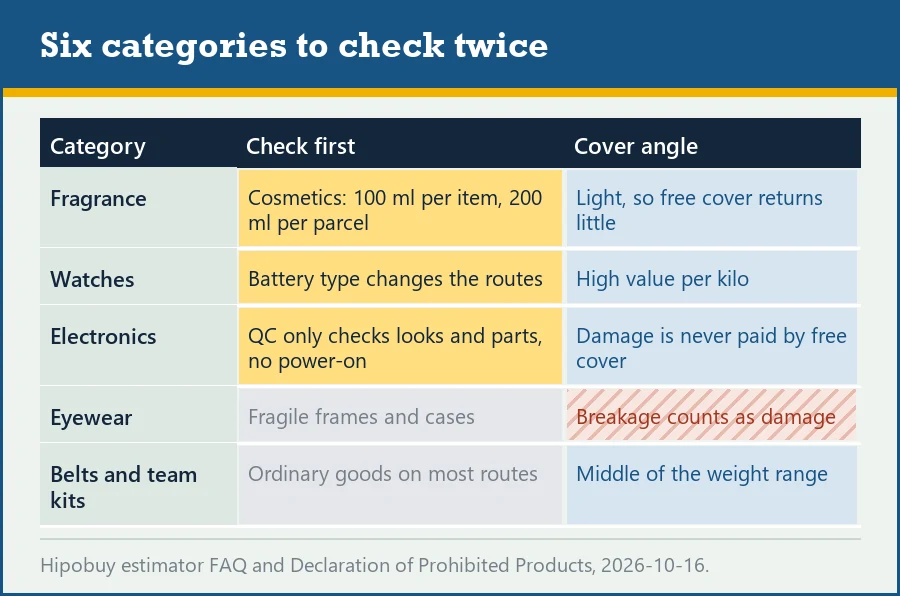
 PerfumeConfirm liquid acceptance before paying.Category
 WatchesCheck case size, movement and battery restrictions.Category
 ElectronicsConfirm model, voltage, battery and route acceptance.Category
Category checks before you order
Belts, eyewear, fragrance, watches, electronics and team kits are on the catalogue too. Their illustrated entries are above; check materials, dimensions and transport restrictions on the actual listings.
- Belts Category
- Eyewear Category
- Fragrance Category
- Watches Category
- Electronics Category
- Team kits Category
Several of these are also the categories where shipping rules bite before cover does: perfumes, batteries in watches and electronics, and liquids all narrow the list of routes that will take the parcel at all, so check the estimator with the right product type selected.
What a category card can and cannot tell you about cover
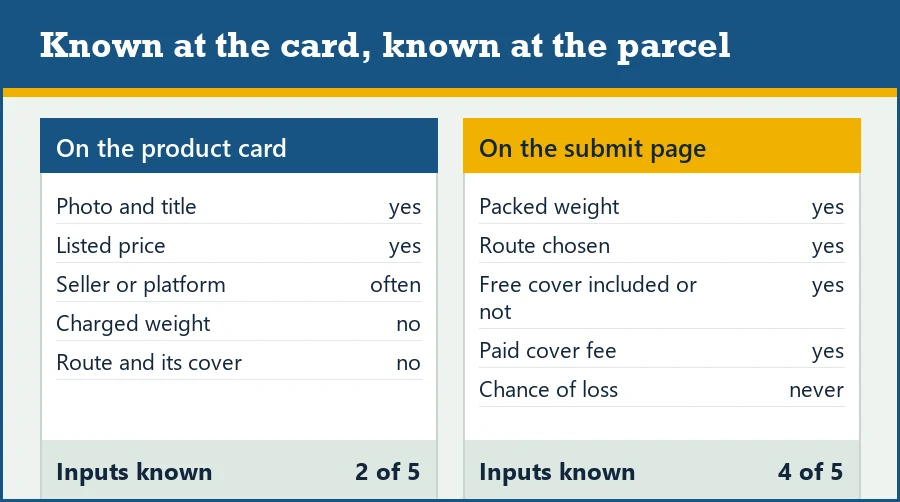
A card shows a photo, a title and usually a price. The price is the useful part for cover: it is the number paid cover would return if the item were lost, and the number the free cover would leave behind.
What the card cannot show is the charged weight, which depends on packing and on whether the route bills on actual or volume weight, or which route you will end up on. Those two decide the free payout. If you want a firm weight before choosing a route, Hipobuy sells a 20-yuan trial pack that weighs and measures the parcel first; that is a separate decision covered elsewhere.
Treat the card price as a starting figure. The seller's domestic shipping is added when you order, and it is not part of what the paid tables say they return.
Research the item before calculating protection
A category groups similar kinds of product; it does not certify a seller or extend parcel coverage to every listing. Open the actual item, select the version and save its price, measurements, material and quantity. A photo shared by several shops may hide different specifications. Check an essential detail with the seller before making an irreversible purchase choice.
When the link becomes a Hipobuy order, keep the item reference beside the seller URL. Later, add the warehouse photos and parcel number. Those records connect discovery, purchase and dispatch. The protection calculator can explain a formula using your inputs, but it cannot establish that the goods, route or incident meet every condition of a future claim.
Searching the catalogue with the payout rules in mind
The search box on the home page searches the same catalogue as the cards. A few habits make the results more useful once cover enters the picture.
- Search for the material as well as the item: "wool coat" and "nylon jacket" weigh very differently in a parcel, and weight is what the free cover pays by.
- Note the listed price as you go. It is the goods value you would type into the comparator, and the amount the free cover leaves out.
- Group light, pricey items and heavy, cheap ones in your head before you plan parcels. Mixing them averages the per-kilo top-up across the whole box.
None of this changes what a listing contains. Read the listing itself, and the warehouse photos once the item arrives, before deciding anything.