Charged weight sets the free payout; warehouse photos show what left
Two things that happen before the parcel leaves China decide how a claim goes later: the weight it is billed at, and the photos taken when the goods arrived at the warehouse.
One number for the freight and the free payout
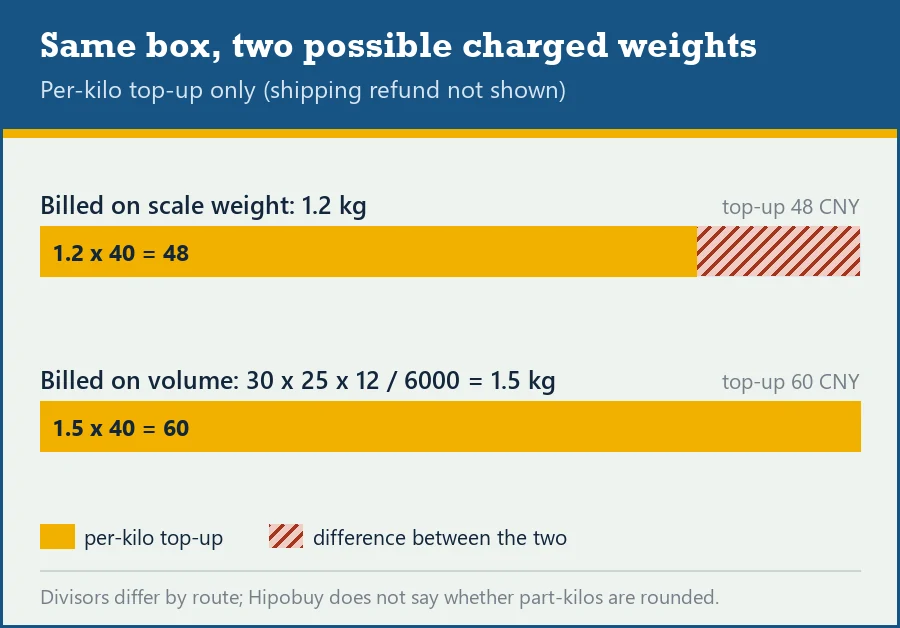
Most routes charge by whichever is heavier, the scale reading or the volume figure, which Hipobuy works out as length x width x height divided by a figure that varies by route, between 5,000 and 8,000 in the data we read. Some routes charge actual weight only; US AIR USPS-ZF1, for example, says "Weighing is based on the actual weight of the goods".
The free cover's 40 yuan a kilo is paid on the parcel's weight, which we read as the same charged weight. A bulky, light parcel billed on volume therefore earns a larger top-up than its scale weight suggests. That is not a reason to ship air; it just explains why two parcels of similar goods can get different payouts.
Shipping is prepaid on an estimated weight and settled after packing. The details belong to the weight pages of other guides; here it is enough that the final freight bill is the figure the cover works from.
Choosing a shipping route with cover in mind
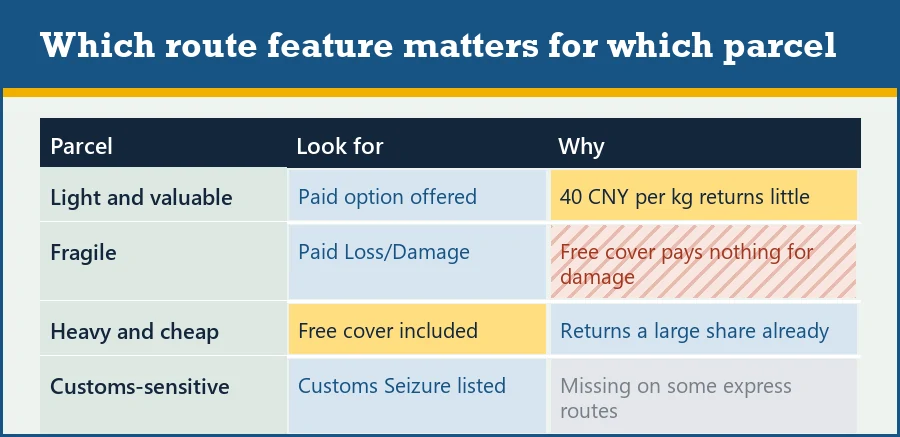
The route list in the estimator mixes price, delivery window and tags. For cover, three of those tags matter more than the rest: whether the route includes free cover (hover the "Insurance" tag), whether Customs Seizure Protection is offered, and how the route bills weight.
A light parcel of valuable things on a route without free cover has no Hipobuy cover unless you buy it. A heavy parcel of cheap things on a route with free cover gets a large share back anyway. Between those two, the comparator is quicker than intuition.
What the warehouse QC checks, and what it skips
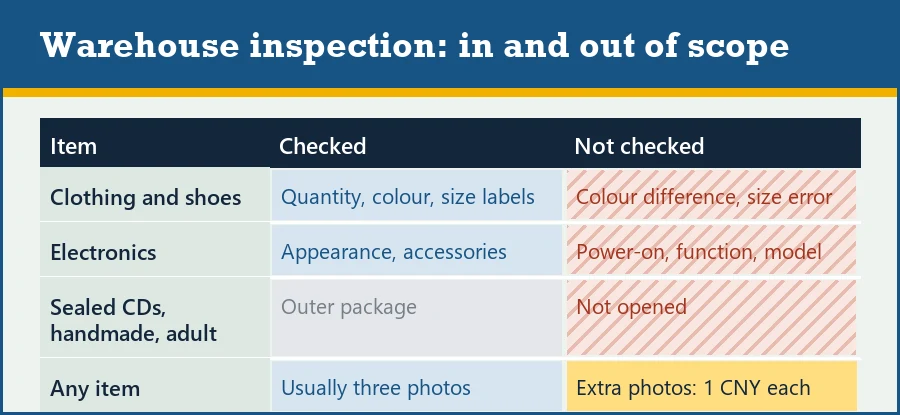
According to Hipobuy's forwarding and inspection rules, the warehouse checks eligible packages for quantity, colour, size and other specifications, and repacks the goods in Hipobuy self-sealing bags. It does not check colour difference, size error or how well a product works. Electrical and digital items are checked for appearance and accessories only, without powering on; sealed CDs, handmade items and adult products are not opened.
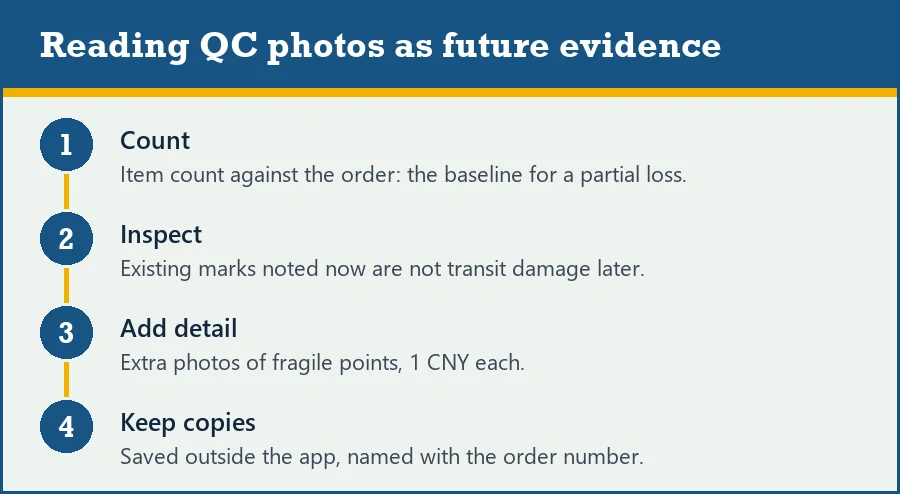
The regular inspection photos are "generally three", typically front, back and side or logo. Extra photos of details or measurements cost 1 yuan each.
Reading QC photos as evidence for a later claim
QC photos are usually read for one question: is this the right item? For cover they answer a second one: what condition was it in before it left? A damage claim is far stronger when the warehouse photo shows the item intact.
- Count the items against the order, so a later "partial loss" has a baseline.
- Look for marks, dents or stains now, so they are not blamed on the journey.
- For fragile or valuable items, pay for one or two extra photos of the weak points.
- Save copies outside the app with the order number in the file name.
Keep evidence that identifies the difference
Useful QC evidence links a specific item to the selected option. Keep a clear label photo, the relevant measurement and any visible defect, together with the order reference. If an image is too small, open the original or request the missing angle. A screenshot of someone else’s purchase may help research a seller but does not establish the condition of your own goods.
Before dispatch, resolve the item issue and record the final contents and packing decision. After delivery, preserve the box and relevant delivery evidence if something is wrong. Tell support whether you are describing a seller mismatch, warehouse packing problem, missing parcel or delivery damage. These are different questions; the existence of photographs alone does not determine who is responsible or what will be paid.
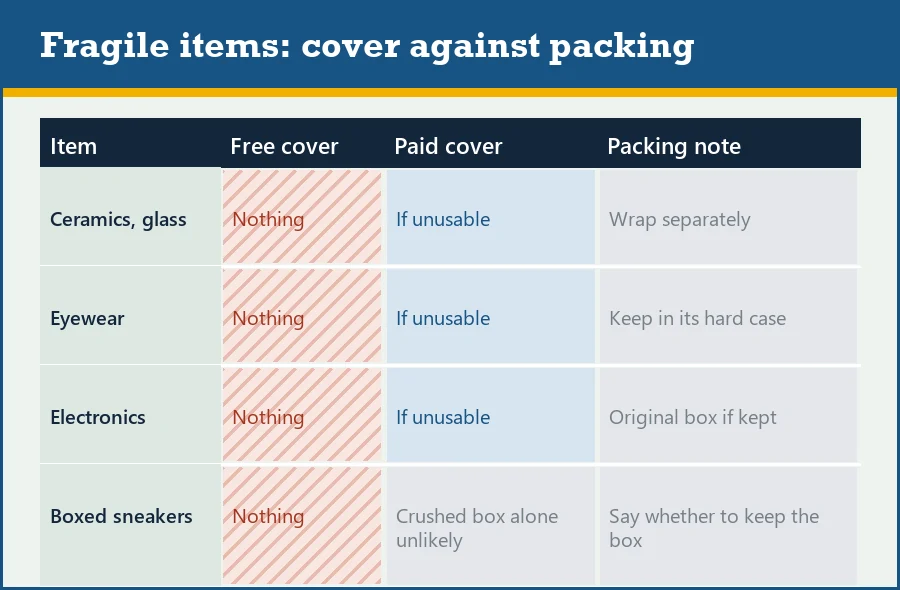
Packing matters more when damage is never covered for free
Because the free cover pays nothing for damage, the box is the only protection a fragile item has on a route where you do not buy paid cover. The submit page has a remarks field, labelled for "other special requests for the parcel", where you can ask for extra padding around a specific item.
Write the request in plain words and name the item, for example "wrap the ceramic mug separately and keep it away from the shoes". Then check the parcel photos if your route and options include them. Hipobuy does not promise that a request will be followed exactly, but a written request is also part of your record if something does break.
Paid Loss/Damage Protection pays only for "severe damage rendering items unusable", with valid proof. Scuffed boxes and creased packaging are unlikely to count, so packing well helps even with paid cover.
Customs at the destination, in brief
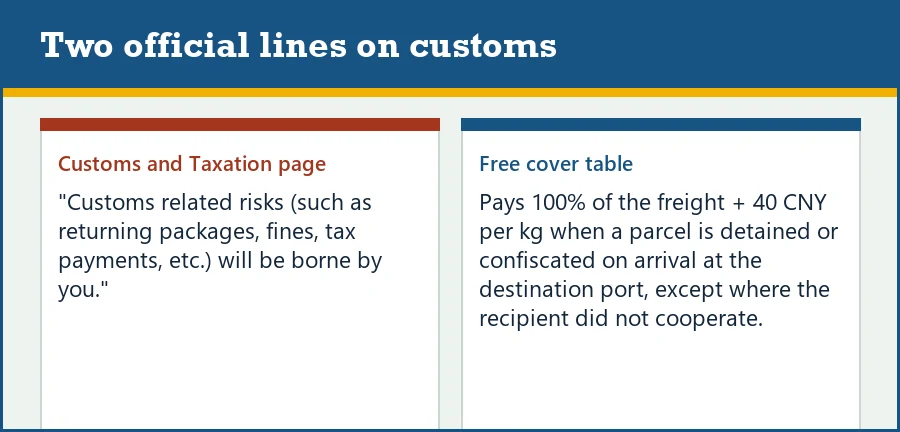
Routes carry a tax tag in the estimator, and the rules behind those tags differ by country; that subject deserves its own guide. For cover, one sentence from Hipobuy's customs and taxation page sets the tone: "Customs related risks (such as returning packages, fines, tax payments, etc.) will be borne by you."
The free cover pays only for detention at the destination port that Hipobuy confirms, and not when the parcel is held up by the recipient, through unpaid tax or a missed reply. Hipobuy's own tariff threshold table also still lists an 800-dollar figure for the United States that is out of date, so do not plan a parcel around it.